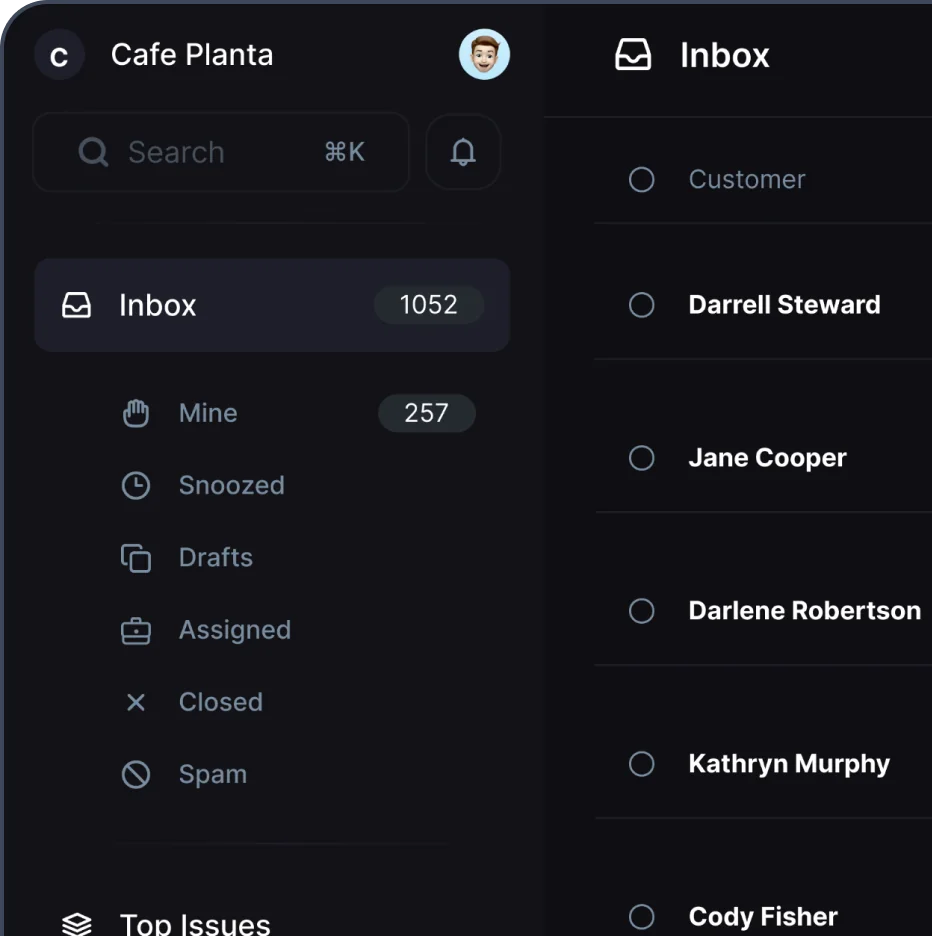

Customer service plays a pivotal role in shaping the reputation and growth trajectory of ecommerce brands. As direct-to-consumer businesses scale rapidly, founders and CX leaders face the challenge of maintaining high-quality customer interactions while accommodating an ever-expanding customer base. Here’s where effective collaboration tools come into play, ensuring that your team can deliver consistent, exceptional service.
This article walks you through ten top tools specifically designed to boost customer service collaboration. We’ll cover how these tools can enhance your support operations, drive customer loyalty, and ultimately contribute to the long-term success of your brand.
2. Live Chat Portals
If you've ever been in a hurry and needed quick answers while shopping online, you know the frustration of waiting for an email response. Live chat portals bridge this gap by offering real-time communication with customers. They’re like the friendly shop assistant you’d find in a brick-and-mortar store, ready to help at a moment’s notice.
Why live chat portals are a game-changer:
- Immediate Assistance: Customers receive instant responses, enhancing their shopping experience and reducing cart abandonment rates.
- Proactive Engagement: Agents can initiate chats based on user behavior, offering help before customers even ask for it.
- Multitasking: Agents can handle multiple chats simultaneously, increasing efficiency and allowing your team to assist more customers in less time.
Integrating a live chat portal into your ecommerce platform can significantly improve customer satisfaction and retention, making it a must-have tool for growing brands.
3. Knowledge Bases
Imagine having a comprehensive library of information at your fingertips, ready to assist customers with their most common queries. That’s exactly what a knowledge base offers—a self-service option that empowers customers to find answers independently, reducing the burden on your support team.
Here’s why knowledge bases are invaluable:
- 24/7 Availability: Customers can access information anytime, even outside business hours, enhancing their experience and satisfaction.
- Consistent Information: A well-maintained knowledge base ensures that all customers receive accurate and up-to-date information.
- Resource Efficiency: By handling routine inquiries, a knowledge base frees up your team to focus on more complex issues, improving overall efficiency.
Creating a robust knowledge base not only boosts customer experience but also streamlines your support operations, making it a critical component of a successful CX strategy.
4. AI-Powered Customer Support Assistants
AI might seem like a buzzword, but when it comes to customer service, it’s a game-changer. AI-powered assistants can handle routine queries, provide personalized recommendations, and even assist human agents in delivering more efficient support.
Benefits of AI in customer support:
- Automation: AI can automate repetitive tasks, such as answering FAQs, allowing human agents to focus on more complex issues.
- Personalization: AI can analyze customer data to offer personalized recommendations, enhancing the shopping experience.
- Scalability: As your brand grows, AI can scale with you, handling an increasing volume of inquiries without compromising service quality.
By leveraging AI, your brand can provide faster, more personalized support, driving customer loyalty and boosting your reputation.
5. Customer Relationship Management (CRM) Systems
A CRM system is like the Swiss Army knife of customer service tools. It centralizes customer data, tracks interactions, and provides valuable insights into customer behavior, all of which are essential for delivering personalized service.
How CRMs enhance customer service:
- Data Centralization: All customer information is stored in one place, making it easy for agents to access and reference during interactions.
- Customer Insights: CRMs provide analytics and reports, offering insights into customer behavior and preferences.
- Improved Follow-Up: With automated reminders and task assignments, CRMs ensure that no customer inquiry slips through the cracks.
Implementing a CRM system can transform the way you engage with customers, leading to better service and increased loyalty.
7. Feedback and Survey Tools
Feedback is a goldmine of information for improving customer service. Feedback and survey tools allow you to gather insights directly from customers, helping you identify areas for improvement and measure customer satisfaction.
Why feedback tools are essential for growth:
- Real-Time Insights: Collect feedback instantly, allowing you to address issues promptly and make data-driven decisions.
- Customer Satisfaction: Measure satisfaction levels to gauge how well your support efforts are resonating with customers.
- Continuous Improvement: Use feedback to identify trends and areas for improvement, fostering a culture of constant enhancement.
Incorporating feedback tools into your CX strategy enables your brand to stay attuned to customer needs and continuously refine your support processes.
8. Project Management Tools
When it comes to delivering exceptional customer service, coordination is crucial. Project management tools help your team organize tasks, track progress, and collaborate effectively, ensuring that nothing falls through the cracks.
Benefits of project management tools:
- Task Organization: Break down projects into manageable tasks, assign responsibilities, and set deadlines.
- Progress Tracking: Monitor the status of tasks and projects, ensuring that everything stays on schedule.
- Team Collaboration: Facilitate communication and collaboration among team members, fostering a cohesive approach to customer service.
By leveraging project management tools, your brand can streamline operations and deliver more efficient, coordinated support.
9. Collaboration Platforms
In an increasingly remote work environment, collaboration platforms have become essential for maintaining communication and teamwork. These platforms go beyond basic messaging, offering features like video conferencing, file sharing, and integrated apps.
How collaboration platforms enhance teamwork:
- Real-Time Communication: Facilitate instant messaging and video calls, keeping your team connected regardless of location.
- File Sharing: Share documents and files easily, ensuring that everyone has access to the latest information.
- Integrated Apps: Access third-party apps directly within the platform, streamlining workflows and reducing the need for multiple tools.
With a robust collaboration platform, your brand can foster a culture of teamwork and ensure that your customer service team operates at peak efficiency.
10. Analytics and Reporting Tools
Data is the backbone of informed decision-making. Analytics and reporting tools provide valuable insights into customer interactions, helping you identify trends, measure performance, and optimize your support operations.
Here’s why analytics tools are indispensable:
- Performance Measurement: Track key metrics, such as response times and resolution rates, to evaluate your team’s performance.
- Trend Analysis: Identify patterns in customer behavior, allowing you to anticipate needs and proactively address issues.
- Data-Driven Decisions: Use insights to make informed decisions about resource allocation and process improvements.
By harnessing the power of analytics, you can fine-tune your customer service strategy and drive continuous improvement.
Final Thoughts
Effective customer service collaboration is vital for the growth and success of fast-growing ecommerce brands. By implementing the right tools, you can enhance your support operations, drive customer loyalty, and build a lasting brand reputation. From shared team inboxes to analytics tools, each solution offers unique benefits that contribute to a more efficient, customer-centric approach.
For those looking to streamline their customer support with a simple yet powerful solution, Fullcourt is worth considering. This ecommerce helpdesk is built specifically for Shopify brands, offering a shared inbox, live chat, knowledge base, and AI assistant in one intuitive platform. With Fullcourt's lightweight design and affordability, you can focus on delivering exceptional service without the burden of bloated, costly helpdesks.

Spencer has been working in product and growth for the last 10 years. He's currently Head of Growth at Sugardoh. Before that he worked at Bump Boxes, Buffer, UserTesting, and a few other early-stage startups.